celiac disease · children · dairy free · food · Food allergies · food allergy blogs · food sensitivities · gf foods · gluten free · Gluten free eating · gluten free food · gluten free foods · gluten free lifestyle · gluten free travel · gluten intolerance · gluten intolerant · health · kids · vegan · vegetarian

Gluten Free in Louisville, KY

Photo Credit: Ray Schuhmann

Part of the reason I haven’t written much lately has to do with a trip to see my family in Louisville, KY, which turned out to be a very easy place to visit with multiple food intolerances in our crew. The other reason is the sheer craziness of summer with two high-energy boys~ it takes some time to adjust from school year days to summer days and honestly, I’m still adjusting. But, here’s what you will find in Louisville if you head that way (maybe in May…?) It is the Derby City after all.

Annie May’s Sweet Café is a gluten and nut free place that also has a large selection of vegan items. We went there for lunch and immediately regretted having not gone earlier in the trip. My son thought their vegan cream of broccoli soup was ‘epic’ and three of us got sandwiches we very much enjoyed and I was the only one of the three who is even gluten intolerant. The desserts we ate were delicious~ mostly cookies with cream in the middle, some vegan and some not depending on the person. My sons and I had the vegan kind which were dipped in chocolate too and probably the most decadent thing I’ve had in years. I don’t know what the vegan cream was in the middle but it definitely tasted like the real thing and I did not ask because if I knew how to make those things I might never leave my kitchen again.

Just down the road is Bluegrass Burgers which advertises on its sign outside, “Gluten free buns and beers” but it isn’t just buns and beers actually because I asked about the veggie patty and the black bean patty (they have both!) and those were also gluten-free and vegan. They were nice and patient about my questions, something that can be hard to find at restaurants where the going trend is to hate on people with food intolerances. They were extremely friendly and their food was great but there is one warning, their fries are way too good. Seriously, if you don’t want to eat a ton of them, just say no because once you start it’s all over~ they are seasoned to perfection and more addictive than chocolate covered cashews. Highly recommend this place. (And chocolate covered cashews for that matter.)

And of course there’s pizza. There are several places that have gluten-free options, but we chose Blaze Pizza because they have vegan cheese, all the pizza pies are individual size, and they cook them quickly in a wood fire so there (theoretically) isn’t much wait time. I was impressed that when I ordered the gluten-free crusts and vegan cheeses that they asked me if they needed to change gloves when handling those pizzas. They knew what they were doing when it came to allergies and I felt quite safe feeding their food to my kids and eating it myself. We liked the taste but it kind of reminded me of Chuck E. Cheese pizza, which isn’t necessarily a bad thing, something about it was just similar…the thinner crust, snappier cheese, slightly sweet tomato sauce. But if that isn’t to your taste, there are plenty of other pizza places that have gluten-free crust options, such as Mellow Mushroom, Impellizzeris, Puccini’s, Uncle Maddio’s, and Cottage Inn Pizza, so basically wherever you are in Louisville you are never far from gluten-free crust.

Something else you are never far from in Louisville are natural foods stores, so in a pinch you can always find allergy free food at Whole Foods, Lucky’s Market, or shop local and visit Rainbow Blossom at one of their five locations.

A surprising amount of allergy-friendly food can be found at the most unusual place of all, and I say that mostly because the town’s name is Santa Claus but also because the amusement park there, Holiday World, is, well, an amusement park (and water park) which generally aren’t hubs of allergy free dining.
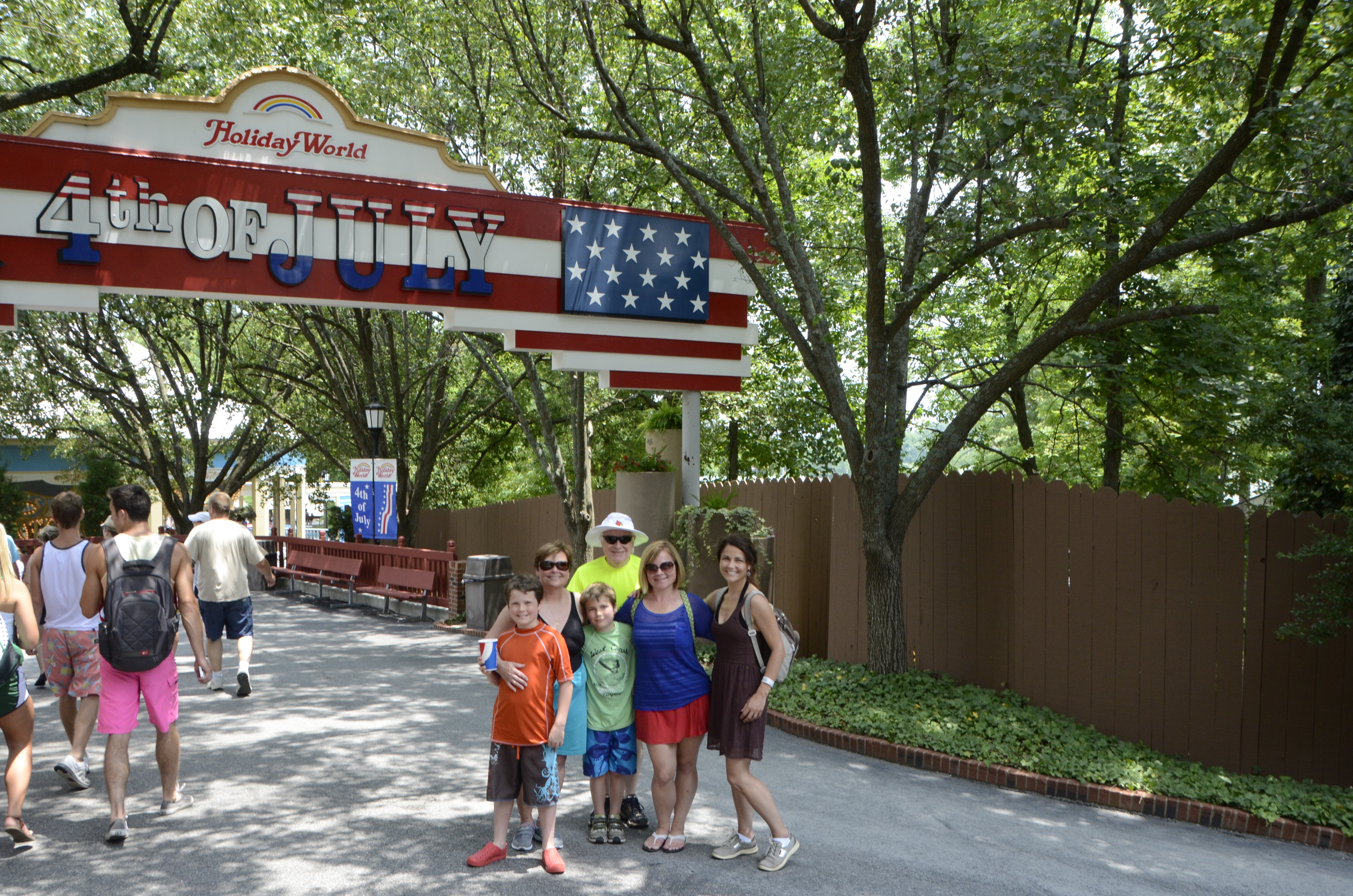
Photo credit: Santa's Little Helper
Photo credit: Santa’s Little Helper

This place is about 70 miles from Louisville and well worth the trip if you are traveling with kids or just like rides, water parks, and Christmas music in July. Just check out this list of allergy-free foods that you can get there and you’ll be adding Santa Claus, Indiana to your must-do list. The only thing I caution is to have the list handy with you before you go in to order because the people behind the counter weren’t always up-to-date on the offerings. There seemed to be one person in charge who handled the allergic folks and the rest of them waved her down to deal with us. That was fine with me, as long as there was one person dedicated to keeping us safe I was thoroughly impressed. We also had to wait extra time for the allergy free food so another caution is to go before your four-year old is in low-sugar-sunburnt-over-tired-and-hungry-tantrum-mode, but really it wasn’t too long of a wait, 15 minutes maybe. Of course 15 minutes with a hungry child is a lot longer than 15 minutes with just yourself to worry about, so you’ve been forewarned. But both my sons said the place was better than Disney Land, so check it out.

I’m sure there are plenty of other restaurants that accommodate gluten intolerant people but I just want to highlight one more because their menu is very clear with calling out gluten-free items, along with vegan, vegetarian, pescatarian, and whatever other kind of ~ian you want to call yourself, they’ve heard it all before. Ramsi’s Café will fill your worldly cravings when you’ve tried all the gluten-free pizza (impossible!) and eaten all the burgers on gluten-free buns that you can handle. Kids are welcome but if you are going to leave them behind for an evening out with your significant other, this is the place to go. When you are finished with dinner be sure to walk up and down Bardstown Road for some fun shopping and people watching, or grab a movie at the nearby Baxter Avenue Theaters. Enjoy!

 

gf bread · gf foods · gluten free · gluten free bread · Gluten free eating · gluten free food · gluten free foods · gluten intolerance · gluten intolerant

Seattle Gluten-Free bakery

The other day I had the rare opportunity to wake up in downtown Seattle and look around for a breakfast place. It happened to be mother’s day so it was busier than usual, but we found a place to sit and eat some breakfast foods, which honestly were nothing special. I didn’t mind the mediocre hash browns though because I had a mission for the day to find this gluten-free bakery near Pike Place Market that I had read about called Coffee & Specialty Bakery. It is a tiny little hole in the wall which we walked right by at first and we had to backtrack to find it. I’m so glad we did. It smelled like a real bakery in there and I bought the boys and myself croissants, something we haven’t had in ages. I didn’t ask if they were dairy free but they sure didn’t taste it, so I’m guessing they were made with butter, but it was worth every bite. I have no idea what flours they use but if I hadn’t known it was from a gluten-free bakery I would have sworn it was a traditional croissant. The reviews of the place speak a lot to the friendliness of the owners and it’s all true. If my sons had been with me I’m quite sure they would have been compelled to hug them because they were both so sweet and smiley. I’ll definitely be heading back there any time I am in Seattle from now on.

celiac disease · food · Food allergies · food allergy blogs · food sensitivities · gluten free · Gluten free eating · gluten free food · gluten free foods · gluten free lifestyle · gluten intolerance · gluten intolerant · Uncategorized

Adjusting to a Gluten-Free Diet

There are many guides to help newly diagnosed celiacs and gluten intolerant people but I know when you are first figuring it all out it feels like you are the only person in the world changing your diet and lifestyle. There will most likely be favorite meals you are giving up, familiar restaurants, and things like weekly meet-ups and dinner parties need to be rethought. Things you never had to think about before suddenly need attention, everyday habits, social rituals, and even the chores of shopping and cooking scream for a revamp. It’s a lot, and it can be overwhelming, but hopefully it will help to know that many people have been there, with their miner’s lamps on before you, walking through the dark and leaving notes. First of all, make a list of all the things you can eat. It’s so easy to focus on the food/foods that need to be eliminated and feel like everything is off-limits, but in reality there will always be a lot more food on the OK list than on the ‘must avoid’ list. It is important to figure out where the hidden gluten might be, like soy sauce, fake meat products like soy hotdogs, and oat products, but it is equally important to understand there are things like wheat free tamaritamari

gluten free faux meats bistro burger,

and safe oat products gluten free oats. (Unless you react to the similar protein that is found in oats the same way you react to gluten. Some people can eat certified gluten-free oat products just fine, while others cannot.) Beyond the products that are made to be gluten-free, of which you will find just about anything you can think of, there are foods that are naturally gluten-free and they are still there for you, so go ahead and eat all the French fries and corn tortillas you want. Most natural foods stores, like Whole Foods, would be happy to have a knowledgeable employee walk around with you to show you the gluten-free items and they will also know which are the best sellers, so if you don’t know which bread to try first just ask what the most popular brand is and start with that one. Calling ahead to find out when the best time to come in for some personal attention would be advised and you might even be able to do that at a regular grocery store~ depends on the place. A local Co-op here has monthly(?) food tours around their stores to highlight gluten-free things, or sometimes there are other themes, but the point is you might find something similar in your own local store. Speaking of that local co-op, it is called PCC and they have a webpage dedicated to gluten-free info and so does Whole Foods. Both of those places have many recipes that are labeled gluten-free and are a great place to find healthy foods in general. Trader Joe’s also has a gluten free list and other special diet lists and I recommend you look at your local favorite store’s website to see what they have available. Also check out  Urban Spoon for information on restaurants and bakeries that are gluten-free friendly and find some places to visit sooner rather than later so when the inevitable time arrives when someone asks to meet for lunch you will have a place to suggest.  Delicious living, a magazine you may have at some point seen in a natural foods store, has a guide for gluten-free living and there are several magazines dedicated to food allergies, but Living Without is the most popular one. There are blogs, social media groups, and online gluten-free stores to also offer assistance and advice, recipes and in some cases, coupons. In short, you aren’t alone and once you get into a gluten-free groove, it’s really not all that hard and you will find the amount you feel better outweighs any missing of old foods by so much that you truly don’t miss them.

celiac disease · children · dairy free · food · Food allergies · food allergy blogs · food sensitivities · gf foods · gluten free · Gluten free eating · gluten free food · gluten free foods · gluten free lifestyle · gluten intolerance · gluten intolerant · kids · vegan · vegetarian

Broccoli and Tofu

You can’t really ever go wrong with tofu and broccoli, at least in my oldest son’s opinion. His favorite way to eat that healthy combination used to be wrapped in a spelt tortilla with garlic sauce. He even wrote an essay about that dish in third grade when asked about his favorite thing to eat, but sadly, he can’t eat spelt anymore and corn tortillas are just not the same. They are great for soft tacos, quesadillas, and ‘beandillas’, (a quesadilla made with refried beans instead of cheese) but corn tortillas just do not complement the broccoli and tofu like the spelt did. He missed that dish terribly, along with countless others, once his gluten intolerance was discovered, but now he’s found a new favorite way to enjoy broccoli and tofu. Here’s the recipe:

broccoli and tofu with pasta

Ingredients:

1 package brown rice fusilli

½ yellow onion

2 crushed cloves of garlic

3-4 cups broccoli, cut into bite size pieces

1 package extra firm tofu, drained and wrapped in paper towels to get out extra water

Approx. 2 T. olive oil (1 for the stir fry and 1 for the pot of pasta)

1 T. balsamic vinegar (or to taste)

1 T. gluten free Tamari

Dried basil and oregano to taste

Salt and pepper to taste

For this dish, I start the water boiling for the pasta as I begin the cutting up process. Pour in at least one tablespoon of the olive oil in a large pan, and then add the onions, cooking until translucent. Next the garlic should be added in, with the broccoli following. Pour the vinegar over the broccoli while stirring the veggies. Add the tofu then cover the tofu with the tamari. While cooking, stir in the herbs, salt, and pepper, and cook until the broccoli is bright green and the tofu is warm throughout with a bit of browning. Meanwhile, make the fusilli according to the package directions, and when all is done combine into approximately 4 bowls. This is one pasta dish that doesn’t require parmesan, but feel free to add it if you prefer, or if you like just drizzle on a bit more olive oil. For my son and I, we do not add anything but our forks.

baking · dairy free · food · Food allergies · food allergy blogs · food sensitivities · gf bread · gluten free · gluten free bread · Gluten free eating · gluten free food · gluten free foods · gluten intolerance · gluten intolerant · kids

Gluten-Free Sourdough Starter

My son needed a science project and I needed a reason to try to make the sourdough starter recipe I’ve been eyeing for months, so we decided to work together and see what happens. The recipe we are using is from Jennifer Katzinger’s Gluten-Free & Vegan Bread. I’ve wanted to make sourdough starter for a long time now, ever since I read about it being a more easily digested bread than other types with single strands of yeast, but the recipes I read always seemed too complex and involved too much planning. Once I read Katzinger’s version which was already gluten-free I started thinking I could do it. Except I didn’t. There was still that planning part that got in my way, until my son’s science fair came up and I thought, we could do this~ we have a week and a half, plenty of time to get the starter going and then to try to bake with it a couple of times, with enough time even for a failure or two. We will actually use the starter later today for the first time, but actually making the mother was easier than I expected, so in case you are feeling daunted by the idea yourself I thought I’d share the steps so far. First, get a gallon size glass jar and put in 1C teff flour and 1C water.

Making starterStir well.

Then add two purple cabbage leaves and the skin of half an apple.

Adding cabbage and apple skin

Mix well again and then let it sit in a warm spot for 12 hours before stirring and adding more teff and water. After 48 hours (with 12 hours in between stirrings and adding more flour and water) it should be bubbling with yeast activity.

Yeast bubbles

It is then time to take out the cabbage leaves and apple skin and put it in the fridge. It is ready to be used.

Taking out the cabbage

Now it’s time to test if this has worked. There is starter resting on my kitchen counter right now warming up with fresh teff and water for 4 hours and hopefully creating some yeasty activity. Crossing my fingers that we will have fresh sourdough bread by tonight. We’ll see!


celiac disease · Food allergies · food allergy blogs · food sensitivities · gluten free · Gluten free eating · gluten free food · gluten free foods · gluten free lifestyle · gluten intolerance · gluten intolerance diagnosis · gluten intolerance symptoms · gluten intolerant

Brain on Gluten cont.~ News from Living Without Magazine

Neurologic Effects of Celiac Disease 
A study featured at the International Celiac Disease  Symposium looked at neurological dysfunction in celiac disease. More  than half of the study’s 73 participants—newly diagnosed  adults at a celiac clinic in the U.K.—had neurological symptoms.  These included frequent and intractable headaches, balance problems and  sensory symptoms. White matter abnormalities were spotted in the brain  scans of a number of these participants and some had TG6 antibodies.  (TG6 antibodies have been linked to neurological dysfunction in celiac  disease.) Findings suggest that neurological dysfunction is common in  newly diagnosed celiacs, write researchers.
A U.S. study, also featured at ICDS, found that  neurocognitive effects like brain fog are common after exposure to  gluten in those with celiac disease and non-celiac gluten sensitivity  alike. A whopping 89 percent of celiacs and 95 percent of those with  non-celiac gluten sensitivity reported experiencing neurocognitive  effects due to gluten, specifically, difficulty concentrating,  forgetfulness, grogginess, detachment and mental confusion. Symptoms  often began 30 minutes to an hour after gluten exposure and lasted  several days. Results were based on a preliminary online survey  completed by 1,143 individuals with celiac disease and 253 with  non-celiac gluten sensitivity. More work is planned.

This is the exact article I found in my email box this morning from Living Without. Fascinating.

gf foods · gluten free · Gluten free eating · gluten free food · gluten free lifestyle · gluten intolerance · gluten intolerance diagnosis · gluten intolerance symptoms · gluten intolerant · organic

Brain on Gluten

This is an interesting article about one neurologist’s belief that gluten and carbs are responsible for many brain ailments, such as Alzheimer’s, dementia, ADD and such. He talks about inflammation being caused by carbs which in turn is the root of many brain diseases, with gluten being especially damaging because of blood brain barrier issues. The part I found most personally verifiable is where he says many gluten intolerant symptoms are not felt in the digestive track at all, but in other parts of the body, and I can readily attest to that. Other foods majorly affect my stomach and such, but when I eat gluten I feel it almost immediately in my head. I had a low-grade headache from childhood until my 20s when I began to figure out the wheat connection. It is like clockwork, eat something with gluten and I start to feel ‘off’, like maybe I’m coming down with something and need to sleep it off, but then I slowly realize it isn’t just fatigue, but the a headache that is different from a normal headache, which incidentally I rarely get now that I don’t eat gluten. My whole body feels fatigued, I feel slightly depressed, and my head hurts for 3 days, and then it all fades into feeling good again. Very predictable. As for Doctor Perlmutter’s assertion that gluten and carbs are innately bad for us, I tend to disagree. It seems he’s stumbled upon some truths, (carbs cause inflammation, inflammation is bad for our brains, gluten causes the worst problems, etc) but he made some suppositions that go to far. There has long been a link between brain and gut health~ this has been long-established and shows up in products such as MindLinx, a probiotic that emphasizes the link between a healthy intestinal tract and the mind, hence the name, and before gluten intolerance was recognized it was thought that all carbs were equally responsible for digestive troubles. People have singled out gluten, sugar, PH balance (remember that craze?), blood type, fat, and many other things as the be-all-end-all deciding factor in health, always just until the next thing comes up. Granted, they usually have at least a nugget of truth in them, but they are never the golden nugget that they are made out to be. If you look at the world’s healthiest populations with the least amounts of disease you find communities that focus on whole foods~ fruits and vegetables, grains and vegetable fats, with small amounts of meat/fish/poultry. A fantastic book (with recipes!) about these healthiest cultures and their diets is The Jungle Effect by Dr.Daphne Miller. Real food, despite valiant efforts, could not be improved, and in fact has only deteriorated in nutrition and taste since the industrial revolution. We live in an age of amazing medical technology and knowledge, and goodness knows I’m happy to not be living in the middle ages with leaches being the latest and greatest, but sometimes the old ways, the jungle ways, can teach us more than any doctor.

celiac disease · children · dairy free · Food allergies · gluten free · gluten free food · gluten free foods · gluten free lifestyle · gluten intolerance · gluten intolerant

Ups and Downs of Intolerance

Most days the food intolerances my sons and I deal with are not that big of a deal. In fact, they have helped all three of us be healthier so in a way they have been kind of nice. If I could eat gluten, for example, I’d live on bread and such to the exclusion of a lot of other nutrients. BUT, there are days when it really gets…old. Reading every label, dealing with school classroom eating (why do they eat so much at schools? They’ve been back 8 days and already have had a marshmallow party and a cupcake party.) Telling my youngest that no, he can’t have his favorite meal (ever ever again,) and leaving a restaurant wondering if I ate something off-limits, and if so, how bad the reaction will be. (Actually, does anyone know where I can find a recipe for a gluten-free, dairy free, soy, nut, and egg free alfredo sauce recipe? It’s my son’s favorite and that never again thing really doesn’t sit well with me.) It’s tiresome, and honestly I’m just sick of thinking about food all the time, and not like in a tasty way, thinking about what’s in it, how am I going to get variety in my picky sons’ diet, what supplements are we out of, etc… These are the days that call for easy frozen pizza for the boys and trusted comfort foods~ gluten free, dairy free, soy free, nut free, and egg free of course. Thank goodness for dark chocolate.

celiac disease · gluten free · gluten free lifestyle · gluten intolerance · gluten intolerance diagnosis · gluten intolerant

Probiotics for Food Allergies and Intolerances

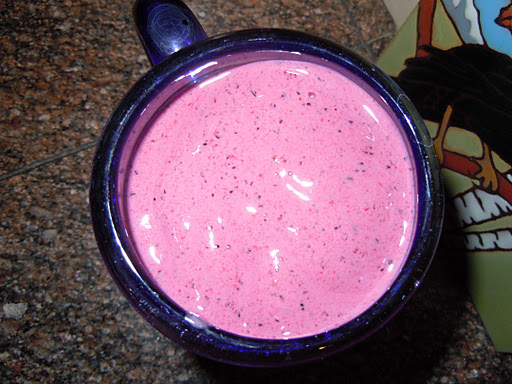
Yogurt and Kefir are great ways to get probiotics, and they make yummy smoothies

My sister sent me this article the other day and I thought it worth sharing. It is called What Really Causes Celiac Disease? and it has a different message than I have seen before. It basically (and I’m giving a very small synopsis of this) says that traditional thought on Celiac disease is that some people have the gene for it, and of those people, some of them have the disease triggered by something. In other words, not everyone with the gene has the disease, so: gene + the trigger = Celiac. They are now thinking there is more to it than that, in fact billions more. “Billions?” you may ask, but yes, when discussing probiotics we get into big numbers. Unfortunately, the modern diet and the modern obsession with antibiotics and antibacterial everything means those big numbers are dangerously low. (Probiotics are things like acidofilus and bifidus which create yogurt and other foods.) This article singles out bifidus as an important player in keeping our digestive systems healthy and allergy/intolerant free. They are still learning about the connections between probiotics and dietary issues, but in the meantime I am going to take in as much as I can, and certainly make sure my kids do too. So far they do not seem to be gluten intolerant like I am, but I’m going to take any step I can that might help keep it that way.

ancient wheat · celiac disease · food · Food allergies · food allergy blogs · food sensitivities · gluten free · gluten intolerance

More on Ancient Wheat

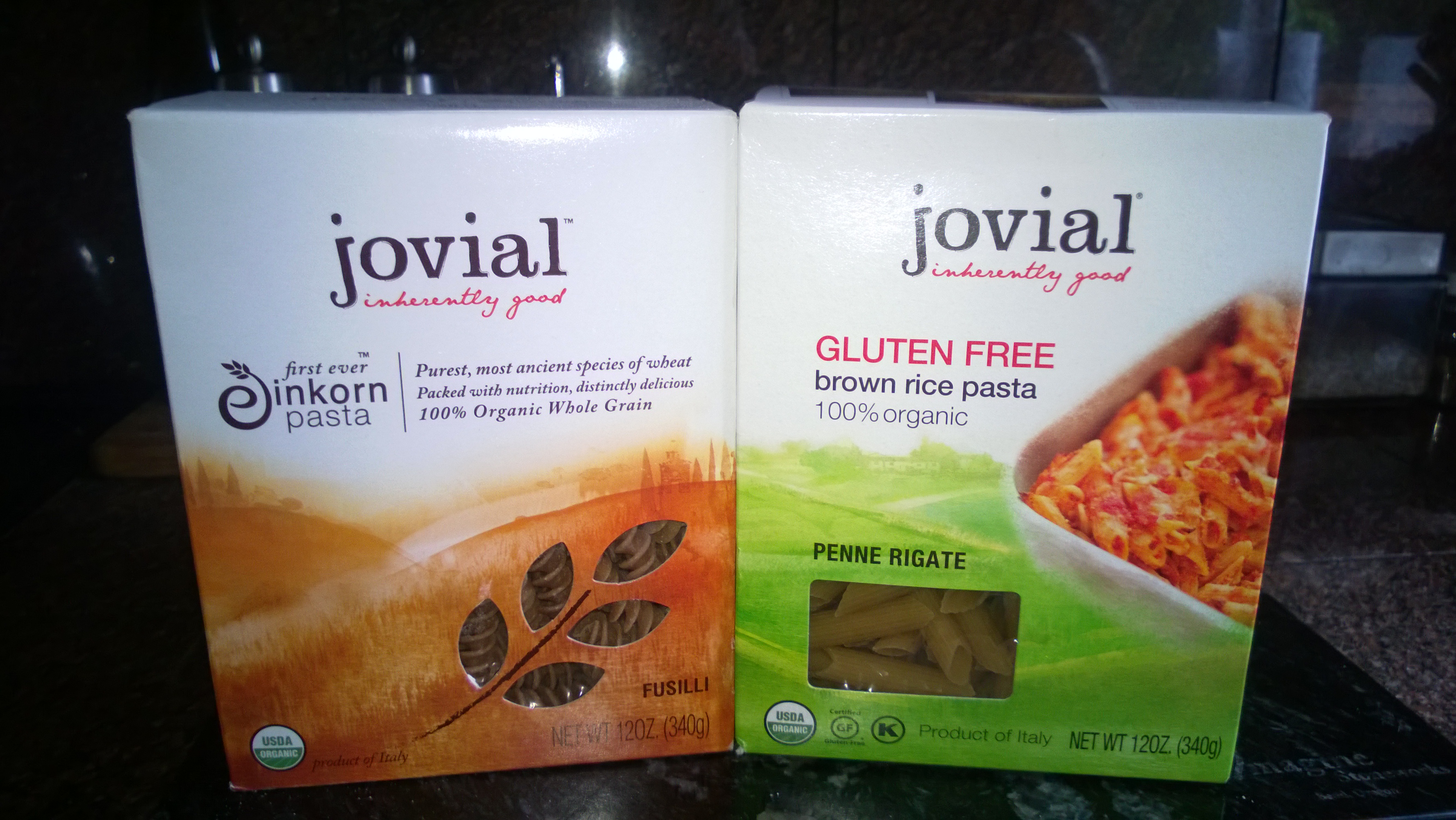
Jovial pastas

So I’ve been hearing about this ancient wheat possibly being digestible for us gluten challenged people and have found one company that is making pastas from one of the strands, and selling the flour. It is called Einkorn wheat and the company I have stumbled upon is Jovial. I have liked their gluten free pastas for a while now, and really enjoy their blog and recipes but up until now I have kind of ignored the whole ‘ancient wheat’ thing thinking it wasn’t for gluten intolerant people. Now I’m starting to hear mumblings that perhaps it is. Obviously, a celiac needs to take extra precaution, but for all those people who don’t eat wheat just because it makes them feel awful in one way or another, this just might be a way to enjoy it again. I don’t know~ I haven’t tried it yet myself. Funny how I used to eat wheat nonstop and now I’m stalling about trying this new development of an ancient grain, but I really don’t like feeling sick. (Shocking, I know.) And really I’d like some more evidence before eating it and possibly feeling sick and causing damage to myself. But, if anything is going to lure me in it will be the possibility of a hearty European style loaf of bread to eat. I could eat alternative grains for pasta, pastries, crackers, and just about anything else quite happily for the rest of my life, but a good old fashioned hunk of crusty bread just can’t be made without wheat. Or at least it doesn’t taste nearly as good, in my humble opinion. Of course, that also means I need to learn how to make a good old fashioned European crusty loaf myself, and apparently Einkorn is tricky to work with (which is exactly why it has gone out of fashion while the higher yield, higher gluten wheats have flourished.) As soon as I drum of the nerve to tackle the baking, and the eating, it’ll be documented here first.