celiac disease · food · Food allergies · food allergy blogs · food sensitivities · gluten free · Gluten free eating · gluten free food · gluten free foods · gluten free lifestyle · gluten intolerance · gluten intolerant · Uncategorized

Adjusting to a Gluten-Free Diet

There are many guides to help newly diagnosed celiacs and gluten intolerant people but I know when you are first figuring it all out it feels like you are the only person in the world changing your diet and lifestyle. There will most likely be favorite meals you are giving up, familiar restaurants, and things like weekly meet-ups and dinner parties need to be rethought. Things you never had to think about before suddenly need attention, everyday habits, social rituals, and even the chores of shopping and cooking scream for a revamp. It’s a lot, and it can be overwhelming, but hopefully it will help to know that many people have been there, with their miner’s lamps on before you, walking through the dark and leaving notes. First of all, make a list of all the things you can eat. It’s so easy to focus on the food/foods that need to be eliminated and feel like everything is off-limits, but in reality there will always be a lot more food on the OK list than on the ‘must avoid’ list. It is important to figure out where the hidden gluten might be, like soy sauce, fake meat products like soy hotdogs, and oat products, but it is equally important to understand there are things like wheat free tamaritamari

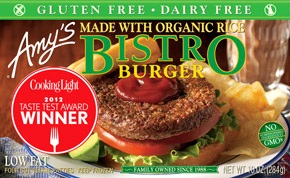
gluten free faux meats bistro burger,

and safe oat products gluten free oats. (Unless you react to the similar protein that is found in oats the same way you react to gluten. Some people can eat certified gluten-free oat products just fine, while others cannot.) Beyond the products that are made to be gluten-free, of which you will find just about anything you can think of, there are foods that are naturally gluten-free and they are still there for you, so go ahead and eat all the French fries and corn tortillas you want. Most natural foods stores, like Whole Foods, would be happy to have a knowledgeable employee walk around with you to show you the gluten-free items and they will also know which are the best sellers, so if you don’t know which bread to try first just ask what the most popular brand is and start with that one. Calling ahead to find out when the best time to come in for some personal attention would be advised and you might even be able to do that at a regular grocery store~ depends on the place. A local Co-op here has monthly(?) food tours around their stores to highlight gluten-free things, or sometimes there are other themes, but the point is you might find something similar in your own local store. Speaking of that local co-op, it is called PCC and they have a webpage dedicated to gluten-free info and so does Whole Foods. Both of those places have many recipes that are labeled gluten-free and are a great place to find healthy foods in general. Trader Joe’s also has a gluten free list and other special diet lists and I recommend you look at your local favorite store’s website to see what they have available. Also check out  Urban Spoon for information on restaurants and bakeries that are gluten-free friendly and find some places to visit sooner rather than later so when the inevitable time arrives when someone asks to meet for lunch you will have a place to suggest.  Delicious living, a magazine you may have at some point seen in a natural foods store, has a guide for gluten-free living and there are several magazines dedicated to food allergies, but Living Without is the most popular one. There are blogs, social media groups, and online gluten-free stores to also offer assistance and advice, recipes and in some cases, coupons. In short, you aren’t alone and once you get into a gluten-free groove, it’s really not all that hard and you will find the amount you feel better outweighs any missing of old foods by so much that you truly don’t miss them.

celiac disease · food · Food allergies · food sensitivities · gluten free symptoms · gluten intolerance diagnosis · gluten intolerance symptoms · gluten intolerant

Celiac Awareness Month

Did you know all children in Italy are automatically screened for Celiac? They, as a society, are much more aware of gluten issues in general which is about reason number 172 that I would like to be there right now, although with the sun warming up around here Washington feels pretty good. It’s been a long grey winter though and I just don’t trust this sunshine to stick around long. Whatever the weather where you are, check out this infographic that Gluten dude is kindly sharing:

celiac-disease-symptoms-500

I’ve never been tested for celiac but as a gluten intolerant person, I can attest to a very large proportion of these.

dairy free · food · Food allergies · food sensitivities · gf foods · gluten free · Gluten free eating · gluten free food · gluten free foods · gluten intolerance · gluten intolerant · organic · vegan · vegetarian

Gluten-free Ramen

At this point in the year I’m pretty much souped out. Not eating it, just making it. So, I’m quite excited to have found this gluten-free ramen that takes all of 4 minutes to make and tastes seriously good. The one I like is by Lotus Foods and has a miso base and I’m pretty sure when my oldest tries it, he’s going to be hooked too because he loves miso, and noodles, and especially fast prep. Try it out yourself on a day when your missing dorm cooking, or more likely, just want some fast soup on a chilly Spring day:

gluten-free Ramen

children · dairy free · food · Food allergies · food sensitivities · gluten free · gluten free food · kids · vegan · vegetarian

Nut-free, Dairy-free ‘nutella’

Back in the glorious days of my sons eating nuts and dairy, my oldest loved nutella on dinner rolls as a snack or lunch item. I decided to look for homemade nutella recipes online to see if there was something I could convert and oh my, there are scores of nutella fans out there, making homemade versions, making dairy free versions, making nut free versions~ I mean if you are looking to make your own nutella, by no means should you stop your quest here. There are hundreds of recipes out there, and most start with the raw seeds or nuts and are truly from scratch. After reading more than a few variations, I decided I didn’t want to go to the store a second time today to get the ingredients I lacked, so I’d just try a quicker, not-so-from-scratch way of making a chocolaty, nutty flavored spread. The sunflower butter I’d bought to replace my son’s peanut butter cravings never really satisfied him, so I grabbed that, the half bar of baking chocolate I had left over from something else, and a teaspoon of vanilla extract.

Ingredients I melted the 2 oz of unsweetened baking bar on low heat while scooping 1/2 C of the sunbutter into the food processor. I added the 1 t of vanilla extract, and then the melted chocolate and processed until smooth, which didn’t take long. I really wanted to avoid the confectioner’s sugar most recipes called for in my research, but when I tasted the blend I knew it needed some sweetening, so I added 1 T honey and blended again. That was better.

nut-free, dairy-free nutella My son tried it on a Maninis dinner roll when he got home from school and gave it a thumbs-up. (His mouth was full after all.) I will probably play around with this recipe a bit more, but for a quick fix, this works well.

celiac disease · children · dairy free · food · Food allergies · food allergy blogs · food sensitivities · gf foods · gluten free · Gluten free eating · gluten free food · gluten free foods · gluten free lifestyle · gluten intolerance · gluten intolerant · kids · vegan · vegetarian

Broccoli and Tofu

You can’t really ever go wrong with tofu and broccoli, at least in my oldest son’s opinion. His favorite way to eat that healthy combination used to be wrapped in a spelt tortilla with garlic sauce. He even wrote an essay about that dish in third grade when asked about his favorite thing to eat, but sadly, he can’t eat spelt anymore and corn tortillas are just not the same. They are great for soft tacos, quesadillas, and ‘beandillas’, (a quesadilla made with refried beans instead of cheese) but corn tortillas just do not complement the broccoli and tofu like the spelt did. He missed that dish terribly, along with countless others, once his gluten intolerance was discovered, but now he’s found a new favorite way to enjoy broccoli and tofu. Here’s the recipe:

broccoli and tofu with pasta

Ingredients:

1 package brown rice fusilli

½ yellow onion

2 crushed cloves of garlic

3-4 cups broccoli, cut into bite size pieces

1 package extra firm tofu, drained and wrapped in paper towels to get out extra water

Approx. 2 T. olive oil (1 for the stir fry and 1 for the pot of pasta)

1 T. balsamic vinegar (or to taste)

1 T. gluten free Tamari

Dried basil and oregano to taste

Salt and pepper to taste

For this dish, I start the water boiling for the pasta as I begin the cutting up process. Pour in at least one tablespoon of the olive oil in a large pan, and then add the onions, cooking until translucent. Next the garlic should be added in, with the broccoli following. Pour the vinegar over the broccoli while stirring the veggies. Add the tofu then cover the tofu with the tamari. While cooking, stir in the herbs, salt, and pepper, and cook until the broccoli is bright green and the tofu is warm throughout with a bit of browning. Meanwhile, make the fusilli according to the package directions, and when all is done combine into approximately 4 bowls. This is one pasta dish that doesn’t require parmesan, but feel free to add it if you prefer, or if you like just drizzle on a bit more olive oil. For my son and I, we do not add anything but our forks.

baking · children · dairy free · food · Food allergies · food allergy blogs · food sensitivities · gf bread · gf foods · gluten free · gluten free bread · Gluten free eating · gluten free food · gluten free foods · gluten intolerance · gluten intolerant · kids

Gluten-free Sourdough Bread cont.

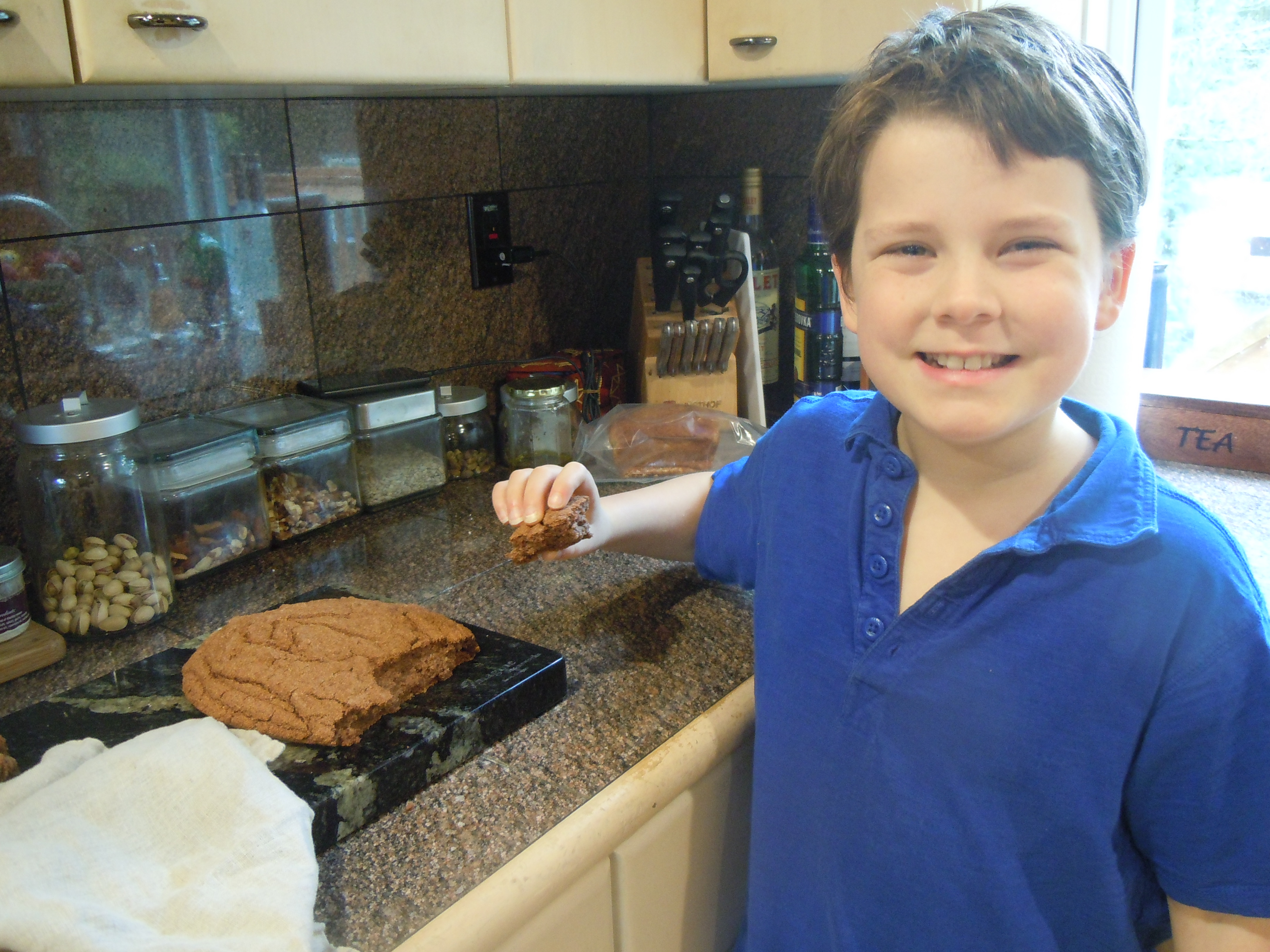
First GF Sourdough bread Well, there it is. The first gluten-free sourdough bread we made. After stirring the ever-funkier starter for several days complete with cabbage leaves and apple skin, my son was not feeling too confident about actually trying the bread. To be honest, neither was I. I really had no idea if the starter we’d made was going to work because it wasn’t ever as bubbly as I expected it to be, but we both were pleasantly surprised. The bread is pretty good!

First taste of GF SourdoughAs you can see from this picture, it did not rise much though. I am guessing as the starter sits for a few more days there will be more yeast activity, and we will try again on Wednesday to make another loaf.  My son thought the bread was more than “pretty good” incidentally, probably because he helped make it and felt ownership in it. That loaf is a blend of teff flour, millet, brown rice and tapioca and he pointed out that the hard crust tasted like cereal and he was right~ it really did. Next time I might do less teff and try gluten-free oat flour for a lighter loaf~ more trials to come!

baking · dairy free · food · Food allergies · food allergy blogs · food sensitivities · gf bread · gluten free · gluten free bread · Gluten free eating · gluten free food · gluten free foods · gluten intolerance · gluten intolerant · kids

Gluten-Free Sourdough Starter

My son needed a science project and I needed a reason to try to make the sourdough starter recipe I’ve been eyeing for months, so we decided to work together and see what happens. The recipe we are using is from Jennifer Katzinger’s Gluten-Free & Vegan Bread. I’ve wanted to make sourdough starter for a long time now, ever since I read about it being a more easily digested bread than other types with single strands of yeast, but the recipes I read always seemed too complex and involved too much planning. Once I read Katzinger’s version which was already gluten-free I started thinking I could do it. Except I didn’t. There was still that planning part that got in my way, until my son’s science fair came up and I thought, we could do this~ we have a week and a half, plenty of time to get the starter going and then to try to bake with it a couple of times, with enough time even for a failure or two. We will actually use the starter later today for the first time, but actually making the mother was easier than I expected, so in case you are feeling daunted by the idea yourself I thought I’d share the steps so far. First, get a gallon size glass jar and put in 1C teff flour and 1C water.

Making starterStir well.

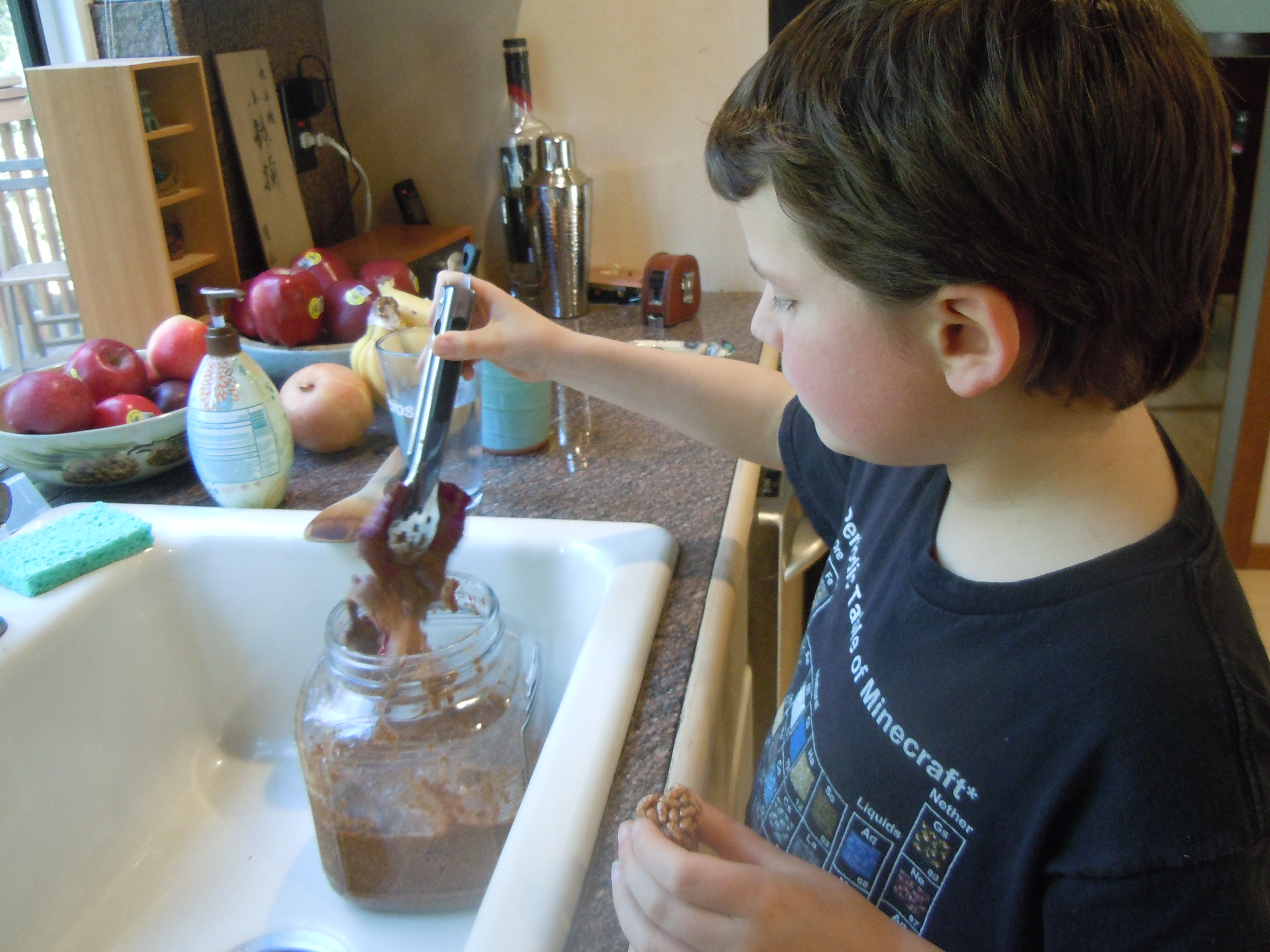
Then add two purple cabbage leaves and the skin of half an apple.

Adding cabbage and apple skin

Mix well again and then let it sit in a warm spot for 12 hours before stirring and adding more teff and water. After 48 hours (with 12 hours in between stirrings and adding more flour and water) it should be bubbling with yeast activity.

Yeast bubbles

It is then time to take out the cabbage leaves and apple skin and put it in the fridge. It is ready to be used.

Taking out the cabbage

Now it’s time to test if this has worked. There is starter resting on my kitchen counter right now warming up with fresh teff and water for 4 hours and hopefully creating some yeasty activity. Crossing my fingers that we will have fresh sourdough bread by tonight. We’ll see!


Food allergies

Food Funkiness

It seems like everyday I read a new article about some nasty thing regularly found in our food. Yesterday’s article talked about nasty food additives found at fast food places. (Shocking, right? Not really but it was a nice article with a picture that I was able to share with my son who was thoroughly disgusted.) The article I read today gave advice on avoiding GE foods. I know we are a country known for innovation and ingenuity, but can’t we all just agree to let food be food? Is it really that crazy of a concept? People have been growing and eating food for quite a while now and it seems like they’ve managed pretty well so far without poly-this and dimethyl-that. Just reading about those things makes me want to go outside and dig in my garden.

celiac disease · Food allergies · food allergy blogs · food sensitivities · gluten free · Gluten free eating · gluten free food · gluten free foods · gluten free lifestyle · gluten intolerance · gluten intolerance diagnosis · gluten intolerance symptoms · gluten intolerant

Brain on Gluten cont.~ News from Living Without Magazine

Neurologic Effects of Celiac Disease 
A study featured at the International Celiac Disease  Symposium looked at neurological dysfunction in celiac disease. More  than half of the study’s 73 participants—newly diagnosed  adults at a celiac clinic in the U.K.—had neurological symptoms.  These included frequent and intractable headaches, balance problems and  sensory symptoms. White matter abnormalities were spotted in the brain  scans of a number of these participants and some had TG6 antibodies.  (TG6 antibodies have been linked to neurological dysfunction in celiac  disease.) Findings suggest that neurological dysfunction is common in  newly diagnosed celiacs, write researchers.
A U.S. study, also featured at ICDS, found that  neurocognitive effects like brain fog are common after exposure to  gluten in those with celiac disease and non-celiac gluten sensitivity  alike. A whopping 89 percent of celiacs and 95 percent of those with  non-celiac gluten sensitivity reported experiencing neurocognitive  effects due to gluten, specifically, difficulty concentrating,  forgetfulness, grogginess, detachment and mental confusion. Symptoms  often began 30 minutes to an hour after gluten exposure and lasted  several days. Results were based on a preliminary online survey  completed by 1,143 individuals with celiac disease and 253 with  non-celiac gluten sensitivity. More work is planned.

This is the exact article I found in my email box this morning from Living Without. Fascinating.

gf foods · gluten free · Gluten free eating · gluten free food · gluten free lifestyle · gluten intolerance · gluten intolerance diagnosis · gluten intolerance symptoms · gluten intolerant · organic

Brain on Gluten

This is an interesting article about one neurologist’s belief that gluten and carbs are responsible for many brain ailments, such as Alzheimer’s, dementia, ADD and such. He talks about inflammation being caused by carbs which in turn is the root of many brain diseases, with gluten being especially damaging because of blood brain barrier issues. The part I found most personally verifiable is where he says many gluten intolerant symptoms are not felt in the digestive track at all, but in other parts of the body, and I can readily attest to that. Other foods majorly affect my stomach and such, but when I eat gluten I feel it almost immediately in my head. I had a low-grade headache from childhood until my 20s when I began to figure out the wheat connection. It is like clockwork, eat something with gluten and I start to feel ‘off’, like maybe I’m coming down with something and need to sleep it off, but then I slowly realize it isn’t just fatigue, but the a headache that is different from a normal headache, which incidentally I rarely get now that I don’t eat gluten. My whole body feels fatigued, I feel slightly depressed, and my head hurts for 3 days, and then it all fades into feeling good again. Very predictable. As for Doctor Perlmutter’s assertion that gluten and carbs are innately bad for us, I tend to disagree. It seems he’s stumbled upon some truths, (carbs cause inflammation, inflammation is bad for our brains, gluten causes the worst problems, etc) but he made some suppositions that go to far. There has long been a link between brain and gut health~ this has been long-established and shows up in products such as MindLinx, a probiotic that emphasizes the link between a healthy intestinal tract and the mind, hence the name, and before gluten intolerance was recognized it was thought that all carbs were equally responsible for digestive troubles. People have singled out gluten, sugar, PH balance (remember that craze?), blood type, fat, and many other things as the be-all-end-all deciding factor in health, always just until the next thing comes up. Granted, they usually have at least a nugget of truth in them, but they are never the golden nugget that they are made out to be. If you look at the world’s healthiest populations with the least amounts of disease you find communities that focus on whole foods~ fruits and vegetables, grains and vegetable fats, with small amounts of meat/fish/poultry. A fantastic book (with recipes!) about these healthiest cultures and their diets is The Jungle Effect by Dr.Daphne Miller. Real food, despite valiant efforts, could not be improved, and in fact has only deteriorated in nutrition and taste since the industrial revolution. We live in an age of amazing medical technology and knowledge, and goodness knows I’m happy to not be living in the middle ages with leaches being the latest and greatest, but sometimes the old ways, the jungle ways, can teach us more than any doctor.