celiac disease · dairy free · Food allergies · food allergy blogs · food sensitivities · gf bread · gluten free · gluten free bread · Gluten free eating · gluten free food · gluten free foods · gluten free lifestyle · gluten intolerant

Substitutes for Common Food Intolerances

I know that food intolerances can be cured and granted, I’m getting a little ahead of myself. We haven’t gotten our test results back yet but I’m already trying to get dairy out of our diets, and I’m leery of eggs and soy because they are common problem-makers too. This is not easy for a primarily vegetarian family, but if we can do it, anyone can, and honestly it hasn’t been all that difficult yet. My youngest who used to live on Annie’s boxes of shells and cheese now has a new love~ garlic bread sticks. I make the Trader Joe’s gluten-free, dairy free flat bread pizza crusts into garlic bread sticks by preheating the oven to 425, mix 1T of olive oil (per sheet of crust), with one clove of garlic and a dash of Mediterranean salt. I pour that on the flat bread and rub it until it is all evenly distributed. It says to cook for 6-10 minutes and I am finding 9 minutes works best for our oven. Once I take out the bread I cut it into 3 long strips, like bread sticks he recognizes from restaurants. He loves them, and I love the olive oil and garlic getting into his body. This is what it looks like and it is in the refrigerated section.

Gluten Free Pizza Crust

Also from Trader Joe’s we’ve been getting goat cheeses of all kinds. I found this goat cream cheese which is perfect on Udi’s bagels. Goat Cream Cheese
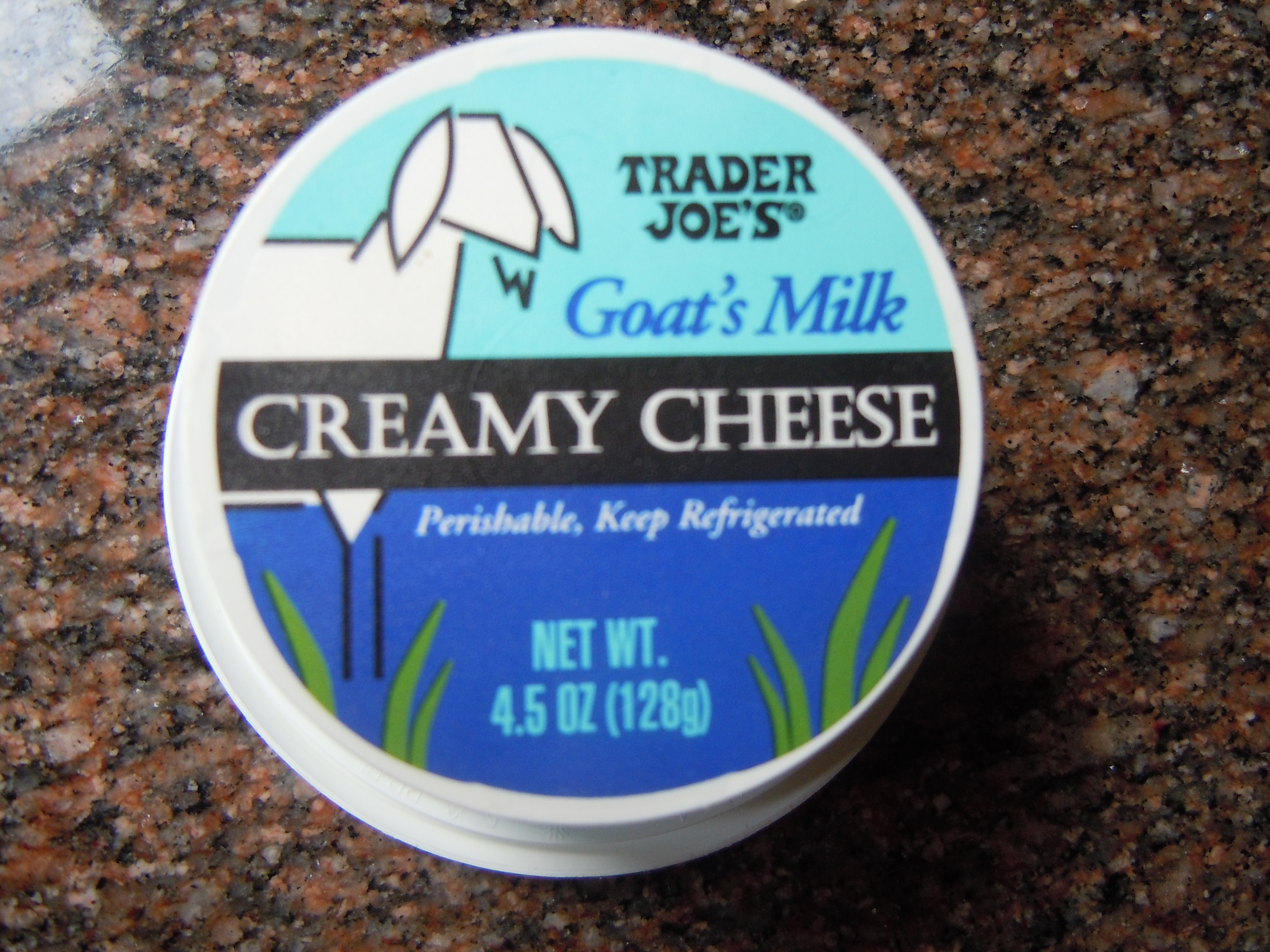
If you are watching fat/calories the above goat cheese is more in line with Neuchâtel cheese than cream cheese. Other cheeses I’ve talked about before, also from Trader Joe’s are these goat cheeses: Trader Joe's Goat CheesesThe triangle is a hard cheese which is good for shredding and snacking, the others are a soft, spreadable cheese that go well with sweeter foods. I am looking forward to making gluten-free crepes with those cute little medallions and fresh strawberries.

Another substitution I’ve made lately is cooking up Lundberg’s Tuscan Risotto instead of their parmesan one that we used to eat all the time (with broccoli and sometimes smoked salmon on the side.) I was very afraid my oldest would revolt against this change because he adores parmesan risotto, but he actually loved the dairy free Tuscan kind. He said it tasted just the same~ works for me!

Lundberg Tuscan Risotto

These are just quick fixes so far, but it helps to make the task seem less daunting to have easy to prepare meals on hand that the kids really like. Once they are used to their intolerances, we will work on adding in more variety. Watch, they won’t even be dairy intolerant! That’d be fantastic, but less dairy in their lives can’t be a bad thing. My son’s sinuses confirm that. It’s nice we are entering summer too for all the fruits that are available. They add color and variety to every meal in a happy way.


celiac disease · dairy free · Food allergies · food sensitivities · gf foods · gluten free · gluten free food · gluten free foods · gluten intolerance · gluten intolerant

Dairy Free, Gluten Free, Care Free too?

While we are still awaiting the actual results from the naturopath on exactly how intolerant we all are, I’ve already been cutting way down on dairy for the kids and myself and I’m happy to report that a. it’s been easy and b. I see good results. My oldest is less clogged in his sinuses, my youngest’s cheeks are looking smoother (he has that pinkish-slightly bumpy stuff on his cheeks that adults get on the back of their arms. No doctor has ever been able to say why, just that it’s something a lot of people have. The naturopath though says it’s a food intolerance and we’ll fix it~ yay for getting to the root of the issue!) and I’m less bloated without dairy in my life. For my oldest, I have switched to almond milk, the vanilla kind (Blue Diamond unsweetened vanilla) that is in the refrigerated section and he likes it just as well as regular milk. For cheese, I’ve switched to goat cheese for quesadillas and cinnamon toast. The goat cheeses were recommended by my friend who is already dealing with a house of four with food intolerances. She gave me two to try from Trader Joe’s, both carrying the Trader Joe’s name: one is a hard cheese called Goat’s milk Gouda cheese. It comes in a fairly big triangular cut and is surprisingly inexpensive. This is what I’ve been shredding for quesadillas lately and my oldest loves it, plus I’ve been slicing it for crackers and it is delightful. The other cheese is a spreadable goat cheese medallion, which comes in small individually wrapped circles. Both cheeses are mild, but the spreadable one is somewhat more like butter than cheese when spread on toast, which is how I ate is yesterday with my salad at lunch. My friend recommended I top the cheese on toast with some cinnamon sugar, so I tried that for my boys and it was a huge hit with my oldest. I’m still working on my youngest on trying new things, but I’m sure it won’t be long before his palate is less picky. For yogurt I’ve been eating Redwood Hill’s goat yogurt or So Delicious’ coconut yogurt. I like the goat kind better because it has a healthier protein to sugar ratio and the taste is more like regular yogurt that I’m used to. The coconut yogurt is good, but less protein and sweeter. I have a feeling that might be what my kids like better though and it would be good to have as many diverse foods as possible in their diet so I’ll have them try it. I asked a couple of employees at Whole Foods what they saw people buying the most of, and they said the almond yogurt, but it has different texture that you have to get used to. I tried it and did not like it at all. The texture is indeed very odd~ not smooth and creamy at all, but to each his/her own. So, that’s how the dairy experiments are going right now.

Here’s a chocolate chip cookie recipe I modified from the Flying Apron cookbook. It’s gluten-free and vegan and so incredibly delicious you’ll never notice the difference. By the way, neither of my kids really like the taste of coconut, but the amount of oil I used in this recipe leaves such a mild coconut taste it’s hard to even figure out what that extra little something is unless you know. And the boys adore these cookies. With that said, use whatever ingredients you have. I don’t believe in that whole “baking must be precise” myth. Experiment!

Gluten Free, Vegan, Chocolate Chip Cookies
Ingredients:

  • 2 cups brown rice flour
  • 1.25 cups + 1T gf oat flour
  • 1 cup garbanzo bean/fava bean flour (it’s a Bob’s Red Mill blend)
  • 1t baking powder
  • 1/2t baking soda
  • 3/4 sea salt
  • 1/2t cinnamon
  • 1/2 cup canola oil
  • 1/2 cup coconut oil
  • 1t vanilla extract
  • 1 cup sugar
  • 1 cup almond milk
  • 1 cup dairy free dark chocolate chips (I like the smaller ones found in bulk sections)

Preheat oven to 350 degrees. Add all dry ingredients up to and including the cinnamon in a bowl and mix with a spoon. Blend the sugar and oils together in a (bigger) bowl with a mixer. Slowly add the almond milk and dry ingredients to the sugar and oil bowl, alternating the ingredients until well blended. Then add the chocolate chips and mix until well-distributed. Scoop dough onto lined cooked sheets and bake for 17-20 minutes. Enjoy!

Food allergies · food sensitivities

Food Allergies vs. Food Sensitivities

It’s a shame we have grown used to calling food sensitivities “allergies” because they are in fact different. Not that the name really matters to the person suffering from a reaction to a certain food(s), but when people are just starting to figure out they are eating something or several things that make them feel bad, it is important to know the difference because doctors do not always explain this. Food allergies are actually much easier to test for. If your body has an allergic reaction to a food, it shows up in blood tests. (Don’t ask me how~ I’m no doctor.) But if you have a sensitivity to a food, it may or may not show up in traditional tests, and unfortunately, most likely it will not. In that case, if you suspect dairy for example, you should take all dairy out of your diet for at least a week (that means all dairy, check your supplements’ ingredients as well as all the food labels in your house.) If you feel better after a few days, then you are most likely sensitive to dairy, or whichever food you are testing. Another option is to find a naturopath who specializes in food sensitivities and he/she can help narrow down the possible triggers and perform a different kind of blood test than the ones regular doctors use. It’s easy to be relieved when the doc tells you that you don’t have any food allergies, but the unfortunate truth is, if you suspect something is not the best for your body, it probably is causing more problems than you even realize. Here in our house we are in the midst of uncovering new food challenges, and I’m strangely excited about it. If I can make my kids feel their best, with more (steady) energy, then some kitchen challenges are worth it. I know it won’t be easy for a couple of weeks, but I’m so excited to see the fruits of our labor that I can get through a rough patch no problem. Still, wish me luck :0).

I just read this article about food intolerance that were found by a nutritionist, which is another good place to turn! And here is another great article on food sensitivities that gives clear steps on where to start the investigation.

ancient wheat · celiac disease · food · Food allergies · food allergy blogs · food sensitivities · gluten free · gluten intolerance

More on Ancient Wheat

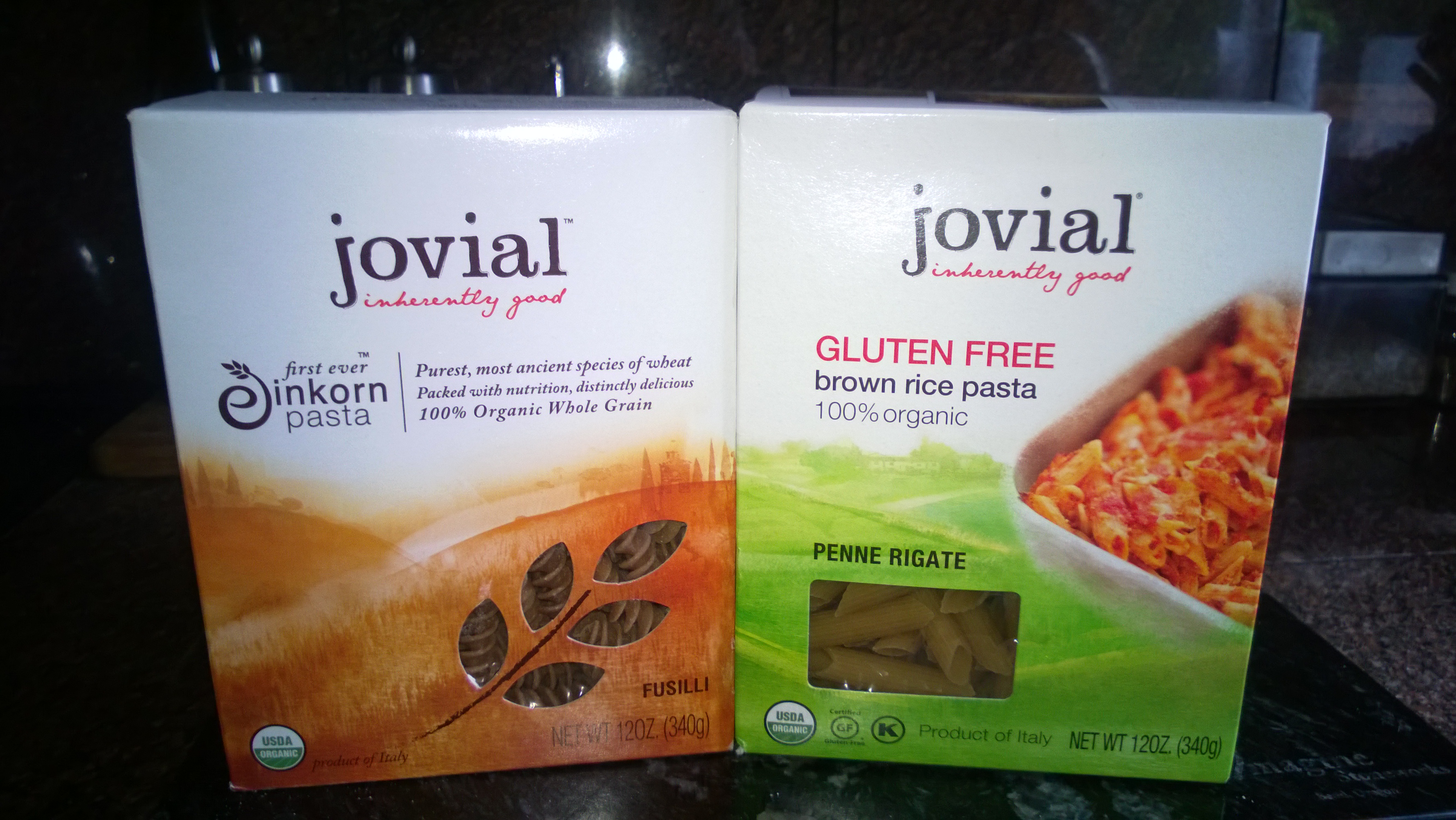
Jovial pastas

So I’ve been hearing about this ancient wheat possibly being digestible for us gluten challenged people and have found one company that is making pastas from one of the strands, and selling the flour. It is called Einkorn wheat and the company I have stumbled upon is Jovial. I have liked their gluten free pastas for a while now, and really enjoy their blog and recipes but up until now I have kind of ignored the whole ‘ancient wheat’ thing thinking it wasn’t for gluten intolerant people. Now I’m starting to hear mumblings that perhaps it is. Obviously, a celiac needs to take extra precaution, but for all those people who don’t eat wheat just because it makes them feel awful in one way or another, this just might be a way to enjoy it again. I don’t know~ I haven’t tried it yet myself. Funny how I used to eat wheat nonstop and now I’m stalling about trying this new development of an ancient grain, but I really don’t like feeling sick. (Shocking, I know.) And really I’d like some more evidence before eating it and possibly feeling sick and causing damage to myself. But, if anything is going to lure me in it will be the possibility of a hearty European style loaf of bread to eat. I could eat alternative grains for pasta, pastries, crackers, and just about anything else quite happily for the rest of my life, but a good old fashioned hunk of crusty bread just can’t be made without wheat. Or at least it doesn’t taste nearly as good, in my humble opinion. Of course, that also means I need to learn how to make a good old fashioned European crusty loaf myself, and apparently Einkorn is tricky to work with (which is exactly why it has gone out of fashion while the higher yield, higher gluten wheats have flourished.) As soon as I drum of the nerve to tackle the baking, and the eating, it’ll be documented here first.

food sensitivities

Tastes Change

This evening I was watching my son eat a bowl of the chili I made this weekend, with side dishes of baby carrots and crackers, and wondering when exactly he became so willing to eat a greater variety of food…? It seems like something changed around the time he was five and I had him on a rotation diet after not eating any of his trigger foods for two weeks. (He tested sensitive to 9 foods.)Those two weeks were not easy, and the rotation diet was no picnic either, but doing that seemed to broaden his taste buds. Instead of quesadillas I made him bean-a-dillas for example. His first encounter with refried beans, when he was around 3 or 4, led him to appreciatively say, “Mmm~ This poo-poo is good.” My younger son won’t touch any bean, round or smooshed, and that isn’t going to change any time soon. Maybe I should put him on a two week cleanse, although I really have no idea what the poor kid would eat. Stubbornness seems to run in the family blood, and food is definitely where he puts his foot down, right next to his fork. I also baked salmon tonight, because we have a freezer full of fish in the garage from an Alaskan trip my husband took with his step dad. My seven year old refused to leave for the park until he could eat some~ I had wanted to go and play while it cooled.  It gives me a shred of hope that my five year old will come around, but the truth is, I was just like him, and it didn’t change until I was an adult.

Food allergies · food sensitivities · sensory processing disorder

More on Sensory Processing Disorder

Someone asked for more info on this, so this post is for her. First of all, there has been quite a bit of research on the relationship between food sensitivities or allergies and SPD, so definitely get your child tested if diagnosed with SPD, or even if you just suspect it. And listen to your gut too. We had two food allergy testings come back negative, but then went to a third Doctor who found very specific sensitivities, and a true yeast allergy that really was the biggest factor. Once that was under control, he was a whole new kid. Sometimes a Naturopath is the best answer. Finding the best therapists for your child is crucial~ we found (after a couple of bad tries) an Occupational therapist who really did a fantastic job figuring out what my son’s triggers were~ what sensory activities he craved, and what calmed him down when over excited. We were then able to use that knowledge to conduct daily life. For example, we tried to do physical activity early in the day, and when my son showed signs of over-exuberance, we knew what activities calmed him, such as deep pressure. (Weighted blankets, heavy work, etc.) We avoided high-sensory activities that did not allow for him to move, such as movies which were generally too loud, too visually exciting, etc. But something like a bounce house place was great b/c he could convert his sensory intake into output easily. He also needed speech therapy and we found a therapist who was very in tune to occupational therapy. She worked only with SPD kids, and kids with autism/aspergers/etc. If your child needs any other therapies I highly recommend finding people who specialize in these kinds of kids b/c they understand the physical and environmental needs of these sensitive kids. My son also went to a school, starting in preschool, that provided OT and ST at school. When he couldn’t sit still, they took him for walks and provided other accommodations in the classroom. We were very lucky. If you end up with a school that does not recognize the special needs of your SPD kid, then find someone who can advocate for you, such as an OT. If the school wants to label your SPD child a behaviour problem, fight it. As a former teacher I can tell you that once your child is labeled that way, there is no return. This probably sounds like a heck of a lot to do, but if you hit it hard and consistently, it pays off quickly. Really quickly. My son is now in first grade and no longer needs any OT or ST, privately or at school. He is still high maintenance in many ways, but the majority of the time he is happy, calm, and excited about life. The entire school is impressed with his progress~ it’s awesome. I hope this helps. Good luck!

Food allergies · food sensitivities · sensory processing disorder

Food Allergies and Sensory Processing Disorder

That’s my son, running full throttle towards the freezing Lake Washington in the middle of March, in a button down shirt and clip-on tie. That pretty much sums him up quite well now at the ripe old age of “6 and three quarters.” Actually, the running full throttle part sums him up from the time he was in my tummy~ we’d see him moving all over the place, all the time, pushing with every extremity and turning around constantly. My younger son barely moved~ he was perfectly content to occasionally just snuggle in a little bit to the right or left. So different. My older son, the one running there, prompted my husband to ask if I’d had an affair with an ancient Roman senator. He just has always had this dramatic passion in everything he does, likes, doesn’t like, etc. He was diagnosed with Sensory Processing Disorder when he was three which basically means something different for every kid diagnosed, but for him meant he didn’t walk, he stomped, he didn’t get close to people, he got on top of  them. Conversely, sound scared him to the point of wearing silencer ear muffs anywhere he was unlucky enough to have ever heard a fire alarm before. In fact, he pointed out far alarms to every stranger in every store we went to for years, usually in a warning tone, “there’s a fire alarm behind you,” to which people would predictably reply, “why yes, there is! I’ve never noticed that.” There is a lot more to SPD than that, it is an exhausting issue for every one involved, but with therapy and patience it can be overcome. And he has. Now that he is in first grade he is far more mellow, able to sit in a classroom with minimal reminders to stay seated and listen, and he has graduated from almost all his therapies. Plus, he is still as passionate as an ancient Roman senator, now obsessed with dressing up in ties everywhere he goes which is a lot easier to explain than the fire alarm thing. The therapies and books were extremely helpful, but I do not think he would be where he is today if we hadn’t explored food allergies. We had him tested twice starting at age 3, but both times he came back with a clean slate. We were not convinced so we took him to a Dr. who uses European methods of diagnoses, and he came back highly allergic to yeast, milk, wheat, corn, soy, tomatoes, eggs, and potatoes. I think I’m forgetting some, but those were the big ones. We took all that out of his diet for 3 weeks, no easy task as you might imagine, and then he went on a rotation diet eating allergen foods no more than once every 3 days. At the same time he took homeopathic types drops the Doctor made up specifically for him that helped his body get used to the allergen foods. Really, I should be calling these food sensitivities b/c they did not produce a true allergic reaction, but they did effect him greatly. The difference was immediate and dramatic. After a year he could eat the foods regularly without the majority of issues that plagued him before. It was not easy, but I am so grateful we did. He is so much happier now. The link between diet and so much of our children’s modern issues is more and more recognized in the mainstream, but we often still have to bang our heads against closed doors before finding an answer. I’ve never met a parent who wasn’t ready to try anything or fight any fight for the child though. They are so worth it.

baking · food · Food allergies · food allergy blogs · food sensitivities · gf foods · gluten free · Gluten free eating · gluten free foods · gluten intolerant

Gluten Free biscuits

Saturday I made gluten free biscuits from the Flying Apron Cookbook replacing the berries with 1 teaspoon of ground cinnamon. As much as I love the berries, we were running low on them and my son has been drinking smoothies in the mornings lately so I saved them for him. Mothers are always sacrificing! But the cinnamon is delicious actually, so it was a good experiment. I’ve been daydreaming of what goodies I am going to make my gluten intolerant friends for Christmas. It is so nice to know other gluten intolerant people with whom to share food! It can be so lonely when you are the one and only at a meal, party, or any other gathering where food and drinks are served. Since I have never really liked meat, I was always the odd one at meals as a child, so honestly by now I should be used to it, but it still bums me out. In fact, Thanksgiving has long been my least favorite holiday, considering I’ve never liked any of that kind of Turkey-ish food, and for last few years I’ve known I can’t eat the bread-ish food (unless I make it). This year I am determined to make it a festive inclusive meal, and since we are hosting that should be relatively easy. I’m putting together the menu this week and I’ll post what I come up with. Really there are such great ideas floating around I’m sure I’ll have more than enough ideas to keep me busy!